
Go to Market Framework for Founders: Put Brand to Work in 90 Days
A go-to-market framework is the repeatable system that connects your target customer, positioning, channels, sales motion and metrics into one launch plan. Run it as a cross-functional, iterative cycle with a named owner and a written artifact at every step, and with decision gates that tell you when to scale. Below, we walk through the steps and a practical launch plan.
TL;DR:
- Assign one owner and one written artifact to each of eight steps, from the ideal customer profile through weekly experiments, or execution can stall.
- Test two or three channels in one or two priority micromarkets; by day 60, require qualified pipeline at a defensible cost.
- At day 90, scale only if conversion, time to value, and early retention meet targets set before launch; otherwise, repair the weakest step.
- McKinsey found 65% of 625 SaaS buyers strongly prefer combined product and sales experiences, supporting self service with timely access to salespeople.
- McKinsey documented a firm whose share of new markets rose from under 20% to over 55% after granular segmentation, with 5% to 7% higher price premiums.
Table of Contents
- What a go-to-market framework is and why founders need one
- An eight-step GTM framework you can run this quarter
- A 90-day plan: prepare, test, scale
- Segmentation and micromarket prioritization
- Channel mix and hybrid product-led sales
- Cross-functional alignment and governance
- Metrics and KPIs that show GTM progress
- Templates and tools to prepare before launch
- Quincy’s perspective: brand clarity is the fastest GTM accelerator
- How we can help you implement your GTM framework
- FAQ
- Sources
What a go-to-market framework is and why founders need one
A go-to-market framework is a structured set of decisions and documents that answers key questions: who you sell to, what you promise them, where you reach them, how you sell, and how you know it is working. A launch slide deck answers those questions once, on paper, and then sits in a folder. A framework keeps answering them every week as you learn.
That difference matters. Forrester warns that GTM too often stays a “slide-deck exercise,” and it recommends treating GTM as an iterative cycle of planning, execution and optimization that aligns teams around the buyer’s decision journey. McKinsey’s analysis of B2B sales growth points the same direction: most GTM frameworks fail when they are treated as one-time exercises, and the ones that work behave like a continuous cross-functional discipline with granular segmentation and CEO-led governance.
A marketing plan, by contrast, mostly covers messaging and campaigns. A GTM framework reaches further: it covers pricing, packaging, sales process, onboarding and the handoffs between teams. Founders who adopt one tend to get a few clear benefits:
- Alignment: product, marketing, sales and customer success work from the same definition of the buyer and the same promise.
- Speed: decisions that used to take a meeting take a glance at the artifact, because the answer is already written down.
- Measurable outcomes: every step has a metric attached, so you can tell a failed assumption from a failed execution.
- Less rework: when positioning changes, you update one brief and everything downstream follows.
- Honest scaling: you spend on growth only after the evidence says the motion works.
The rest of this guide turns that idea into steps you can assign and dates you can hold people to.
An eight-step GTM framework you can run this quarter
Each step below produces one artifact and has one owner. If a step has no owner, it will not happen.
-
Define your target customer and ICP. Start with the buyers who get the most value fastest and stay the longest. Pull your best customers or pilot users, find what they share (industry, size, trigger event, budget holder), and write a one-page ideal customer profile. Include the buying group, not just the champion, because B2B purchases rarely hinge on one person. Owner: founder or head of sales. Artifact: ICP document. Our ideal customer profile framework walks through the process from data to rep actions.
-
Craft your value proposition and positioning brief. State the problem you solve, the alternative buyers use today, and why you win against it. Keep it to one page: target, category, key benefit, proof, and the words you will not use. Owner: founder or head of marketing. Artifact: positioning brief. Our brand positioning workshop examples show how to build this in a focused workshop.
-
Segment and prioritize micromarkets. Break the ICP into narrow slices, such as one industry within one company size band, and rank them by size, fit and ease of reach. Pick one or two to attack first. Owner: marketing with sales input. Artifact: ranked segment list with a rationale for the top picks.
-
Design your channel and demand motions. Match channels to where your chosen segment actually researches and buys: search, outbound, partners, communities, events, product trials. Choose few and run them well. Owner: head of marketing. Artifact: channel playbook with a target and a budget per channel.
-
Build the sales motion, packaging and pricing. Decide whether buyers can self-serve, need a demo, or need a consultative cycle, and set packages and prices to fit. Write the stages, the qualification criteria and the handoff rules. Owner: head of sales. Artifact: sales playbook and price sheet.
-
Set launch goals, KPIs and decision gates. Define what success looks like at each launch milestone, and what evidence earns the right to scale. Put numbers on it before launch so nobody can move the goalposts afterward. Owner: founder. Artifact: launch scorecard with gates.
-
Enable the teams. Turn the positioning brief into sales decks, objection handling, onboarding flows and internal training. Employees need to understand the story before customers hear it, which is why our brand rollout plan starts with your own people. Owner: product marketing or the founder. Artifact: enablement kit.
-
Run experiments, measure and iterate. Treat each channel and message as a test with a hypothesis, a time box and a result. Review weekly, cut what fails, and double down on what converts. Owner: a named GTM lead. Artifact: experiment log.
Pro Tip: Write the decision gates in step 6 before you spend a dollar on step 4. Gates written after launch tend to bend toward whatever the numbers happen to show.
A 90-day plan: prepare, test, scale
A focused launch period is long enough to learn something real and short enough to keep urgency. Split it into three phases, each with an owner and a deliverable.
Prepare. Finish steps 1 through 3 and draft steps 4 through 6. The founder owns the ICP and positioning brief, marketing owns the segment ranking, and sales drafts the playbook. Instrument your analytics and CRM so every lead and trial can be traced. By the end of this phase you should have the core artifacts approved and a launch scorecard signed off.
Test. Launch to one or two priority micromarkets only. Run two or three channels, deliver the enablement kit to the team, and hold a weekly review of the experiment log. Sales reps run discovery calls using the playbook and log objections in a shared place. The output is evidence: which message gets replies, which channel produces qualified conversations, and where deals stall.
Scale or fix. Compare results against the scorecard. Expand what worked into adjacent segments, cut or rework what did not, and update the positioning brief with the language buyers actually used. Customer success joins the review to feed back onboarding friction and early retention signals.
The decision gates keep this honest:
- Preparation gate: ICP, positioning brief, scorecard and tracking are done and approved by the founder. If not, delay launch rather than launching blind.
- Gate 2 (day 60): at least one channel produces qualified pipeline at a cost you can defend, and sales can describe the top objections in buyers’ own words.
- Scale-or-fix gate: conversion, time to value and early retention meet the targets you set in step 6. If they do, add budget and segments. If they do not, fix the weakest step before spending more.
- Always: one person is accountable for each phase output, and the review meeting ends with decisions, not updates.
Segmentation and micromarket prioritization
Broad targeting spreads a young company thin. Micromarkets, meaning narrow slices of the market defined by a few specific traits, let you concentrate effort where you can win. McKinsey documented a case where granular segmentation lifted a firm’s share of new markets and supported higher price premiums, which shows what fine-grained thinking can do for both reach and margin.
From under 20% to over 55% share of new markets, with 5%–7% higher price premiums, after a firm adopted granular micromarket segmentation, per McKinsey. The lesson is that precision pays twice: more wins and better prices.
You do not need a data science team to do this. A simple method works for most founders:
- List candidate segments by combining two or three traits, such as industry plus company size plus trigger event.
- Size each one with whatever you have: CRM counts, public company lists, directory data, or a rough count from LinkedIn searches.
- Score fit on a one to five scale for pain intensity, ability to pay, speed of sales cycle and how reachable the buyers are.
- Multiply and rank, then choose the top priorities for the initial launch period.
- Revisit monthly, because the first results will usually reshuffle the list.
Segmentation also shapes how you organize the team. A prioritized segment tells sales which accounts and territories come first, tells marketing which channels to fund, and tells product which feature requests deserve a hearing. When a deal arrives from outside your chosen segments, treat it as a signal to investigate, not an automatic reason to pivot.
Channel mix and hybrid product-led sales
Pick channels by asking where your buyer already looks when the problem shows up, and how much effort the purchase takes. A low-priced tool with a quick trial can lean on search, content and in-product invitations. A high-value service with many stakeholders needs outbound, referrals and direct conversations. Most real businesses land somewhere between.
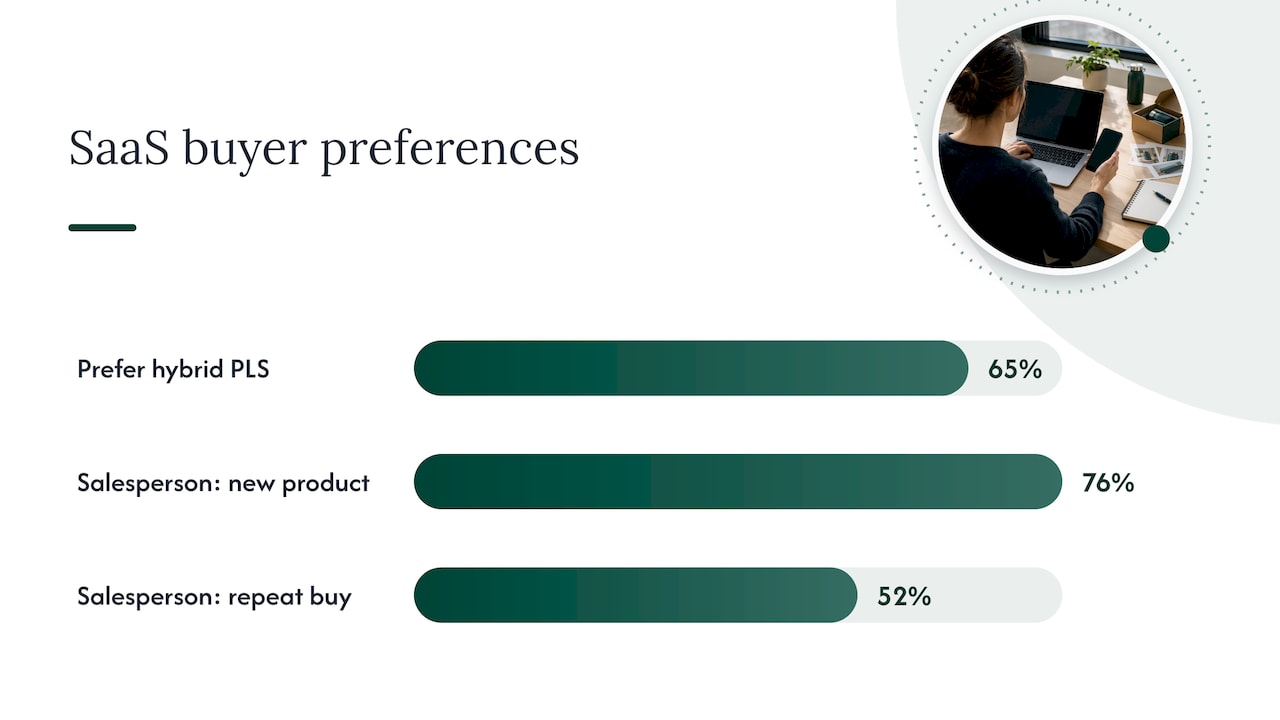
Product-led sales, or PLS, blends the two: buyers try the product on their own, and your sales team steps in when usage signals show a real opportunity. The preference is real. A McKinsey survey of 625 SaaS buyers found that 65% strongly prefer a combination of product-led and sales-led experiences in the same purchase. McKinsey’s earlier B2B research also found that 76% of buyers value talking to a salesperson when researching a new product, falling to 52% for repeat purchases. Your motion should let people learn alone when they want to and reach a human when they need one.
Practical plays to consider:
- Organic search for problem-aware buyers. Content that answers the questions your ICP types into search brings in people already looking. For a deeper look at what produces qualified leads from B2B SEO, see this guide on B2B SEO and lead generation, written in Portuguese.
- Free trial or sandbox with usage triggers. Flag accounts that invite teammates, hit a usage limit or return several days in a row, and route them to a rep.
- Buying group outreach. Because B2B decisions involve several people, Forrester urges moving from legacy lead scoring toward a buying group view that maps the stakeholders and their interactions.
- Partnerships and communities where your segment already gathers.
Use product analytics to decide who gets outreach and when. Practitioners increasingly treat the linear MQL-to-SQL funnel as outdated and recommend product usage and buying group signals as outreach triggers, which keeps your reps talking to people who have already shown intent.
Cross-functional alignment and governance
A framework fails quietly when marketing, sales, product and customer success each run their own plan. Governance is how you prevent that, and it does not need to be heavy. It needs a clear owner, a rhythm and shared numbers.
Start with ownership. Name one GTM lead, often the founder in the early stage, who is accountable for the whole scorecard. Give each function ownership of specific steps, and put the same top-line goals in everyone’s objectives so that nobody wins while the launch loses. McKinsey notes that CEO-led governance is a hallmark of GTM efforts that succeed, so the founder’s presence in the review is not optional.
Then set cadences:
- Regular GTM review: experiment log, pipeline, blockers, decisions made on the spot.
- Short war room during launch weeks: one channel for fast questions across teams.
- Monthly gate review: compare results against the scorecard and decide to continue, fix or scale.
- Quarterly objectives and key results: tie each team’s goals to the shared scorecard.
Define handoffs along the buyer journey: what makes a lead ready for sales, what sales must pass to customer success at close, and what customer success reports back to product. Write each as a short checklist with an owner. As a quick test against the slide-deck outcome, confirm that every step has a named owner, every artifact lives somewhere the team can find it, and every meeting ends with a recorded decision.
Pro Tip: Give customer success a seat in the GTM review from the first week. They hear why buyers really bought, and that feedback is the cheapest positioning research you will get.
Metrics and KPIs that show GTM progress
Track a small set of numbers across the buyer journey, and review them on the same cadence as your gates. Too many metrics bury the signal.
- Awareness: qualified traffic and replies in your priority segments, not raw impressions.
- Acquisition: cost to acquire a customer (CAC) by channel, and conversion from first touch to qualified conversation.
- Activation: time to value (TTV), meaning how long it takes a new user to reach the first result they care about.
- Revenue: product-qualified account (PQA) conversion, win rate, sales cycle length and average deal size.
- Expansion and retention: retention rate, expansion revenue and referrals.
Connect these to your gates. At day 60, you want to see a channel with defensible CAC and healthy conversion to qualified conversations. At day 90, you want TTV, PQA conversion and early retention to meet the targets you set in step 6.
Bain & Company recommends making customer penetration the main growth lever, designing pricing and go-to-market to win new customers every year to offset churn. In practice, that means watching new customer acquisition and retention side by side rather than celebrating one while the other leaks.
Look at trends, not single days. A metric that moves consistently in the right direction tells you more than a single spike.
Templates and tools to prepare before launch
Create these artifacts before you spend on channels. Each is short, and each prevents rework later:
- ICP template: industry, size, trigger events, buying group roles, disqualifiers.
- Positioning brief: target, category, key benefit, proof points, competitive alternatives.
- Channel playbook: channel, goal, message, budget, owner, weekly target.
- Sales playbook: stages, qualification questions, objection responses, handoff rules.
- Launch decision gate checklist: the launch criteria from your scorecard.
For tooling, think in categories rather than brands: a project management tool for owners and deadlines, a CRM for pipeline, product analytics for usage signals, and a simple trial or signup flow that captures the data you need. Start small. Instrument one funnel end to end, confirm the numbers are trustworthy, and add tools only when a real question demands one. Harvard Business School Online has a useful practitioner guide to developing a GTM strategy for tech ventures if you want an additional reference while you build these.
Quincy’s perspective: brand clarity is the fastest GTM accelerator
Most GTM plans stall because the story drifts. Product says one thing, sales says another, and the buyer has to do the work of reconciling them. Positioning is the cheapest place to fix that, which is why step 2 deserves more time than any other. Clear positioning shortens sales conversations, makes channel messaging easier to write, and gives new hires one version of the truth. Our view is that brand is a growth metric, not decoration, and we explain the idea in our guide to startup brand strategy. We use The Golden Spiral™ as a lens for building the positioning brief and Brand-Backed Performance™ to connect that brief to enablement and measurable results. If your launch team cannot explain who you are for in one breath, no channel will rescue the plan.
— Quincy
How we can help you implement your GTM framework
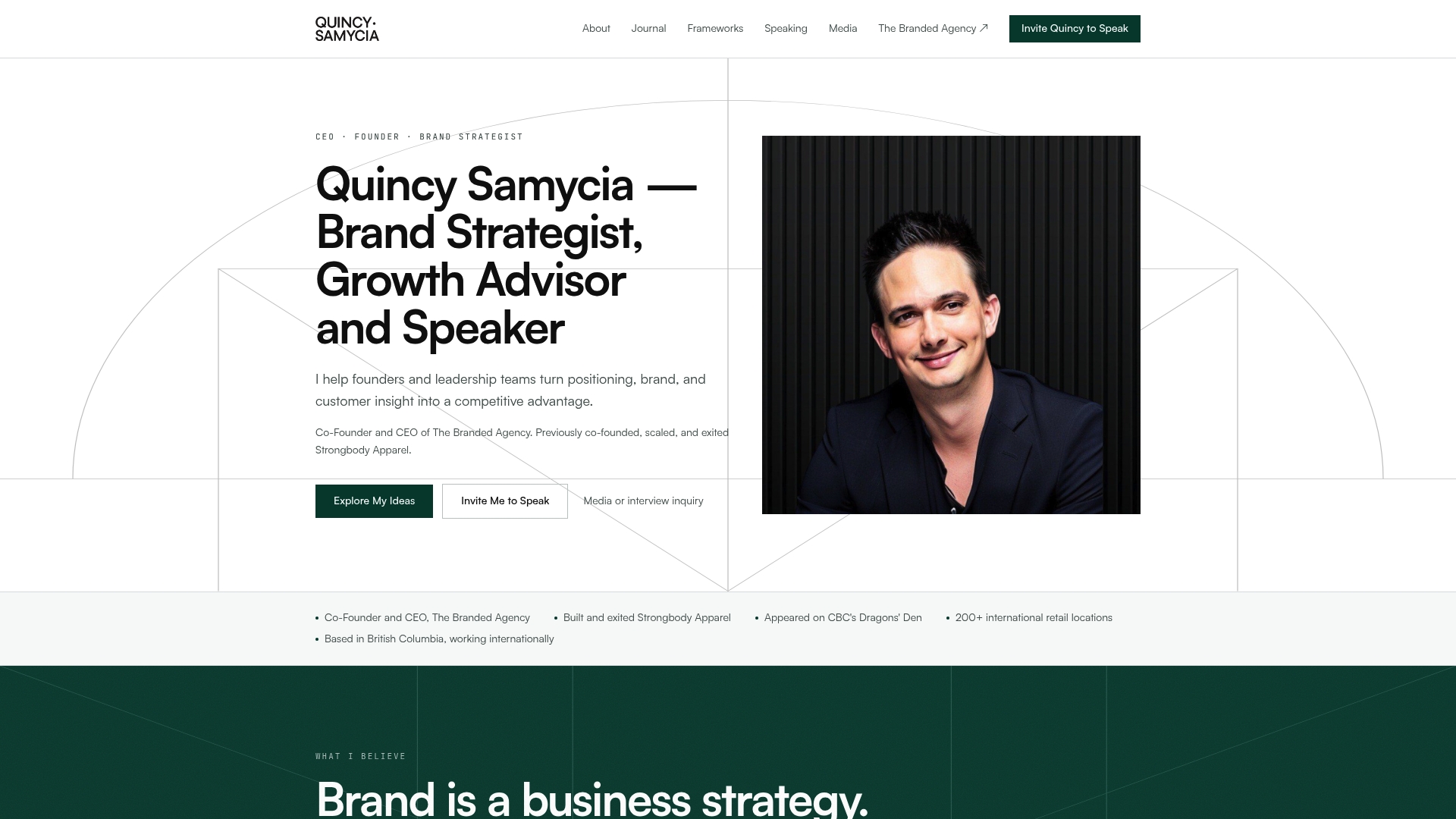
Quincy Samycia and The Branded Agency work with founders and executive teams to turn this framework into launch-ready work. Our engagements typically move from a positioning audit, to a tailored framework, to execution support.
- Brand strategy and positioning to build the brief your whole team can use
- Growth and go-to-market strategy, including executive workshops
- Customer experience mapping that connects messaging to what buyers feel
Tell us where you are in your launch and we will outline a practical next step. Book a conversation with us to get started.
FAQ
What is the go-to-market framework?
It is a structured plan that connects your target customer, positioning, channels, sales motion and metrics into one launch system. The best versions run as an iterative cycle of planning, execution and optimization, not a one-time document.
What are the five pillars of a go-to-market strategy?
A practical way to organize them is audience, positioning, channels, sales motion and metrics. Each pillar needs an owner and a written artifact, so decisions stay visible and the team can improve them over time.
What are the top tools for a GTM plan?
Think in categories: project management for ownership and deadlines, a CRM for pipeline, product analytics for usage signals, and a trial or signup flow that captures activation data. Start with one funnel instrumented end to end before adding more.
What is an example of a GTM strategy?
A software startup picks one micromarket, such as mid-sized logistics firms, and runs search content plus a free trial. Sales reaches out only to accounts that show strong product usage, then reviews results against the launch gates before scaling.